
Apple JournalvsJourney
A side-by-side comparison of two leading journaling apps to help you find the best journal for your needs.
Disclosure: We built Reflection, so we're not neutral. With that said, we've done our best to keep this comparison fair and accurate to help you find the best app for you.
Quick Recommendation
You want a simple, free journaling app built right into your iPhone with smart suggestions based on your photos, workouts, music, and locations — no extra download needed.
You want the broadest platform support with rich media entries, guided coaching, and the ability to export your journal as an ePub ebook.
A Closer Look
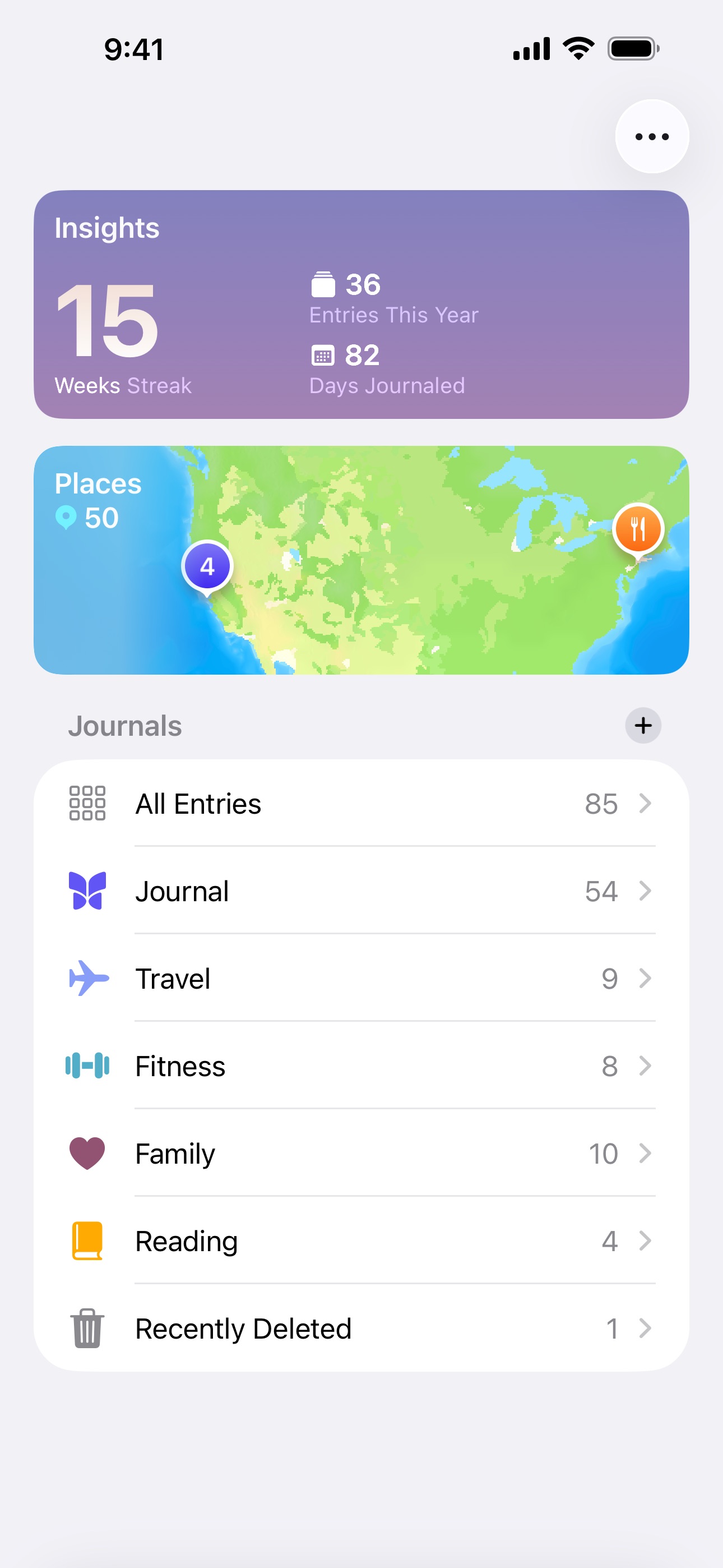
Apple Journal is the built-in journaling app that ships with every iPhone running iOS 17.2 or later. Since September 2025 it also runs natively on iPad (iPadOS 26) and Mac (macOS Tahoe 26). It uses on-device intelligence to surface personalized writing suggestions based on your recent photos, workouts, music, locations, and interactions — making it easy to start an entry without staring at a blank page. Entries support text, photos, videos, audio recordings, and location tags. The app is designed to be simple and private, with data stored on-device and synced via iCloud with end-to-end encryption. It is Apple-only, though: there is no Android, Windows, or web version, so your journal never leaves the Apple ecosystem. And while it lacks advanced features like AI coaching, guided programs, or mood tracking, its tight integration with Apple's platforms makes it a frictionless option for casual journaling.



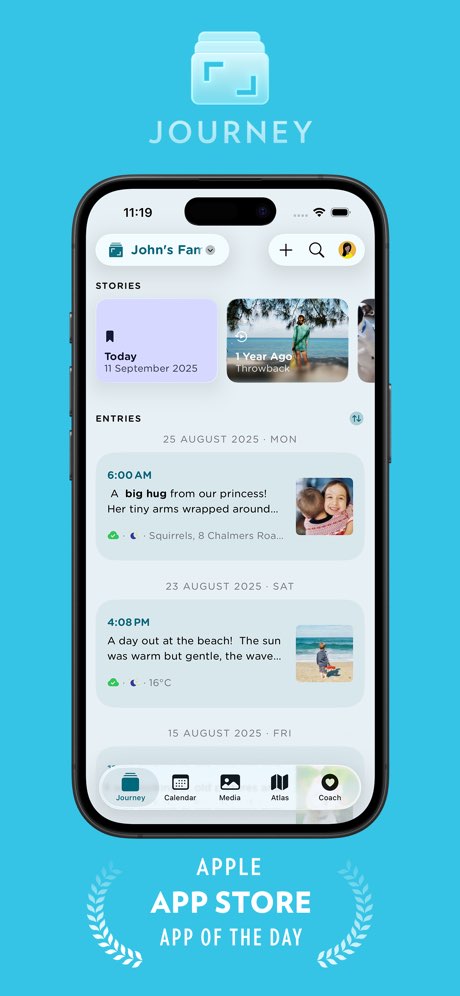
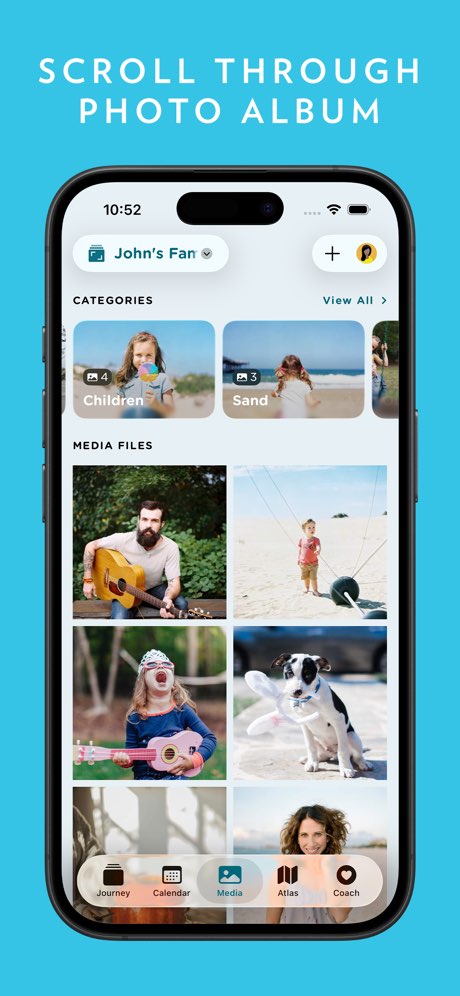
Journey is a feature-rich, cross-platform journaling app that supports text, photos, videos, and audio entries with automatic weather and location tagging. It offers guided journaling coach programs on topics like self-care, gratitude, and personal growth, and can import data from connected services like Google Fit, Fitbit, Strava, and calendar apps. Entries can be viewed in timeline, calendar, atlas map, or photo gallery views. Journey also supports end-to-end encryption and multiple export formats including ePub, making it easy to keep your data portable.


Feature Comparison
Apple Journal offers daily prompts (via journaling suggestions), a free tier — it's completely free with no premium subscription — and, since September 2025, native apps for iPhone, iPad, and Mac. However, it lacks AI-powered insights, real-time voice coaching, enhanced voice transcription, a guide library, personalized prompts, and export options. It is also Apple-only: there is no Android, Windows, or web version, so your journal is tied to Apple hardware. The feature comparison below shows Apple Journal as a simple, private, no-cost option that leverages deep Apple integration, but doesn't offer the deeper AI coaching, guided programs, or true cross-platform flexibility found in more full-featured journaling apps.
Journey is a well-rounded journaling app with strong cross-platform support, a guide library, daily prompts, and solid export options. It includes a free tier and works across all major devices. However, Journey doesn't offer AI-powered insights, real-time voice coaching, enhanced voice transcription, or personalized prompts that adapt to your writing. If you're looking for a reliable, media-rich journal with broad platform support, Journey covers the basics well.
Frequently Asked Questions
.svg)

Yes, Apple Journal is completely free with no in-app purchases or premium tier. It comes pre-installed on iPhone (iOS 17.2 or later), iPad (iPadOS 26 or later), and Mac (macOS Tahoe 26 or later). It does require Apple hardware, though — there is no Android, Windows, or web version available.
Journey is available on iOS, Android, macOS, Windows, the web, and Chrome OS, making it one of the most widely available journaling apps across devices.
Yes. Apple Journal came to iPad with iPadOS 26 and to Mac with macOS Tahoe 26 in September 2025, so it now runs on iPhone, iPad, and Mac, with entries syncing across all three via iCloud with end-to-end encryption. It is Apple-only, though — there is no Android, Windows, or web app — so you cannot open your journal on a non-Apple device.
Yes. Journey can automatically import data from connected services including Google Fit, Fitbit, Strava, and your calendar, adding context to your journal entries.
Apple Journal has very limited export options. There is no built-in way to export all your entries at once in a standard format like PDF or plain text. This means your journal data is essentially locked within the Apple ecosystem, which is a significant consideration if data portability is important to you.
Yes. Journey supports exporting your entries as an ePub ebook, along with PDF, DOCX, and plain text formats.
The latest from our blog