RosebudvsDiarium
A side-by-side comparison of two leading journaling apps to help you find the best journal for your needs.
Disclosure: We built Reflection, so we're not neutral. With that said, we've done our best to keep this comparison fair and accurate to help you find the best app for you.
Quick Recommendation
You want conversational AI-guided journaling with strong intention-setting features and voice support.
You want a one-time purchase journal with no subscription, strong Windows support, and automatic social media and fitness data imports.
A Closer Look
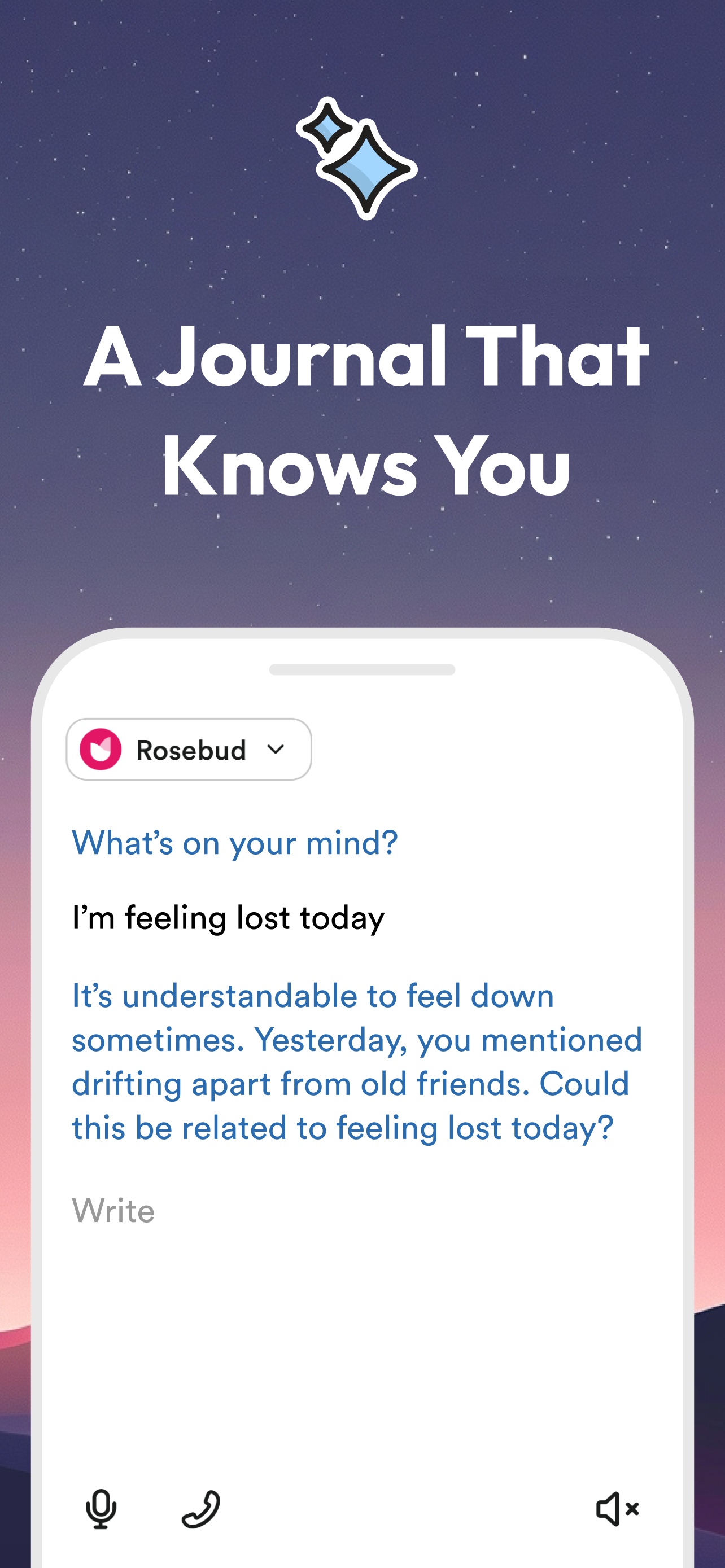
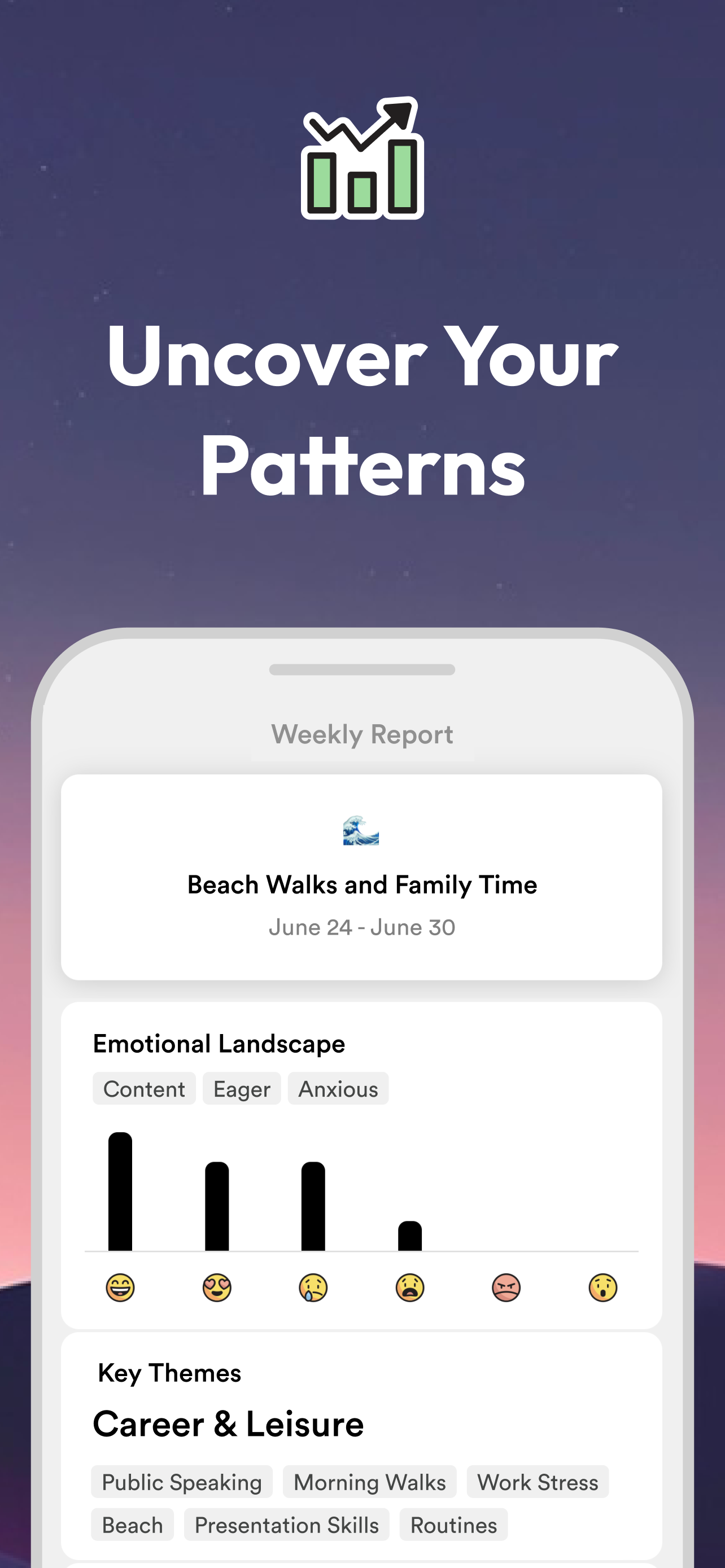
Rosebud uses AI to turn journaling into an interactive conversation. Instead of facing a blank page, you're guided through your thoughts with adaptive follow-up questions that adjust based on your responses. The app analyzes your entries over time to identify patterns, track mood, and offer personalized insights. Features include intention setting with daily check-ins, weekly AI-generated summaries, smart goal tracking, and voice journaling supporting 20 languages. Rosebud also offers book recommendations and a vision board feature based on your journal content.


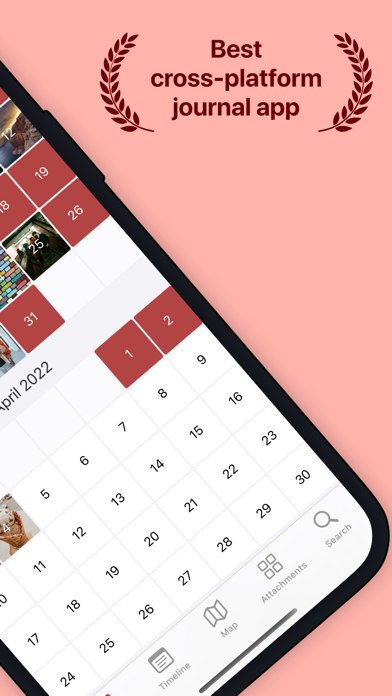
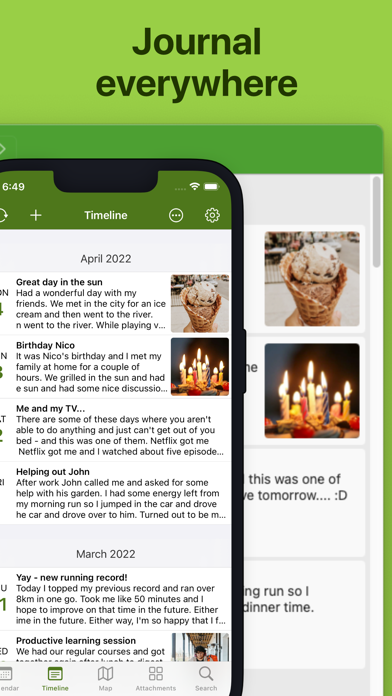
Diarium is a cross-platform diary app known for being one of the best journaling options on Windows, where it won a Microsoft Store Award in 2024. It automatically pulls in your photos, calendar appointments, social media posts, and fitness data from connected services like Facebook, Instagram, Google Fit, Fitbit, and Strava. Entries support unlimited attachments including photos, videos, audio, and PDFs. The app features speech-to-text dictation, password/PIN/biometric protection, and syncs via personal cloud storage like OneDrive, Google Drive, Dropbox, or iCloud.


Feature Comparison
Rosebud is strong on AI-powered insights, enhanced voice transcription, personalized prompts, daily prompts, multi-platform support, export options, and a free tier. It doesn't include real-time voice coaching or a structured guide library. Rosebud's conversational AI approach sets it apart from traditional journaling apps, and the feature comparison below highlights exactly where it leads and where it has gaps.
Diarium offers enhanced voice transcription, multi-platform support, export options, and a free tier, with particular strength on Windows where it's one of the top-rated journal apps. It doesn't include AI-powered insights, real-time voice coaching, a guide library, personalized prompts, or daily prompts. The feature comparison below shows Diarium as a solid traditional diary with automatic data imports, but without the AI and coaching features found in newer apps.
Frequently Asked Questions
.svg)

Rosebud guides you through entries using conversational AI that asks adaptive follow-up questions based on your responses, turning journaling into an interactive dialogue rather than writing on a blank page.
No. Diarium uses a one-time purchase model per platform rather than a subscription, which makes it one of the most affordable long-term journaling options.
Yes. Rosebud supports voice journaling in over 20 languages, with automatic transcription so you can speak your entries instead of typing.
Yes. Diarium is one of the best journaling apps available on Windows, where it won a Microsoft Store Award in 2024. It also supports iOS, Android, and macOS.
Rosebud analyzes your entries over time to identify mood patterns, generates weekly AI summaries, tracks progress on intentions and goals, and even offers book recommendations based on your journal content.
Yes. Diarium automatically imports your photos, social media posts, calendar events, and fitness data from services like Facebook, Instagram, Google Fit, Fitbit, and Strava.
The latest from our blog