


Living with ADHD presents unique challenges in managing attention, emotions, and daily tasks. While traditional coping strategies can help, journaling has emerged as a particularly powerful tool for individuals with ADHD, offering structure, emotional regulation, and enhanced self-awareness. It won't replace treatment, but many people with ADHD find a simple writing habit makes their days easier to manage.
This comprehensive guide explores how journaling specifically benefits the ADHD brain, provides 40+ journal prompts tailored for ADHD challenges, and offers practical strategies for building a sustainable journaling practice. Whether you're newly diagnosed, a lifelong ADHD management veteran, or supporting someone with ADHD, these tools can help transform daily struggles into opportunities for growth and self-understanding.
ADHD (Attention-Deficit/Hyperactivity Disorder) is a neurodevelopmental condition that affects both children and adults. It's characterized by persistent patterns of inattention, hyperactivity, and impulsivity that significantly impact daily functioning. However, ADHD also comes with unique strengths including creativity, hyperfocus capabilities, and innovative thinking patterns.
ADHD involves differences in how the brain handles attention and executive function—the mental skills that include working memory, cognitive flexibility, and inhibitory control—though researchers still debate which differences matter most (Castellanos et al., 2006). These differences can make traditional organizational strategies challenging but also create opportunities for alternative approaches like journaling.
Key ADHD challenges that journaling addresses:
In a brain-imaging study, putting feelings into words reduced the amygdala's response to negative images and increased activity in a prefrontal region involved in regulating emotion (Lieberman et al., 2007). That study wasn't about ADHD, but it hints at why naming feelings on paper can help. Many people with ADHD find journaling helps with:
Research on journaling specifically for ADHD is still limited. Journaling works best alongside proven treatments, not instead of them. For a foundational understanding of how self-awareness connects to personal growth, explore our guide to self-reflection and its importance.
Small, quick wins: Finishing a short entry is a concrete win. Many people with ADHD find that kind of quick reward makes a habit easier to stick with.
Cognitive Load Reduction: Getting racing thoughts out of your head and onto the page can make it easier to focus on what's in front of you.
Practicing self-regulation: A regular writing habit is a chance to practice planning, noticing and adjusting, everyday skills that ADHD can make harder. These are practical benefits people report, not proven effects.
Emotional Regulation: ADHD often involves intense emotions and rejection sensitivity. Journaling gives these feelings somewhere to go, which many people find eases the overwhelm. For those dealing with depression alongside ADHD, our comprehensive guide to journaling for depression provides additional strategies for managing co-occurring mood challenges.
Self-Advocacy Skills: Through journaling, individuals with ADHD develop better language for describing their experiences, leading to improved communication with healthcare providers, educators, and employers.
Routine Building: The structure of regular journaling helps establish routines—crucial for ADHD management—while remaining flexible enough to accommodate varying attention spans and energy levels.
These prompts are designed specifically for the ADHD experience, addressing common challenges while leveraging ADHD strengths. Use them flexibly—choose prompts that resonate with your current needs. For additional therapeutic prompts beyond those listed here, check out our mental health journal prompts guide.
Perfect for ADHD attention spans, this method involves 5-10 minute focused writing sessions. Set a timer, choose one prompt, and write continuously until the timer sounds. This technique leverages the ADHD brain's ability to hyperfocus while preventing overwhelm.
How to practice:
Combine writing with visual elements to engage different parts of the ADHD brain:
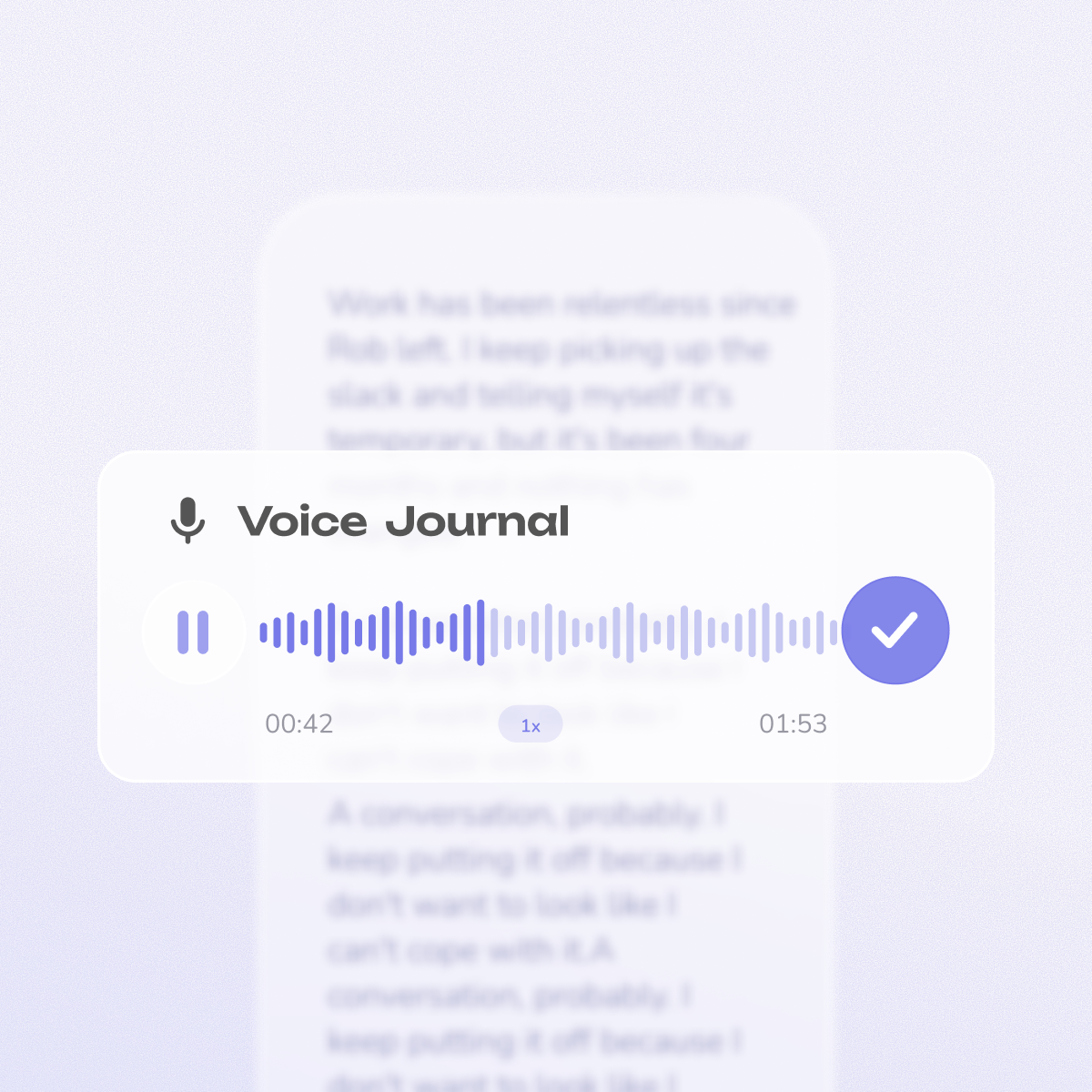
For those who struggle with the physical act of writing or prefer verbal processing:
Goal: Establish the habit without pressure
Goal: Develop self-awareness patterns
Goal: Make journaling a sustainable tool
Goal: Evolve your practice with changing needs
For the ADHD brain, digital tools offer:
Recommended features to look for:
Traditional pen-and-paper offers:
ADHD-friendly analog setups:
Solutions:
Solutions:
Solutions:
Solutions:
Journaling can enhance your relationship with:
For students with ADHD:
For employed adults with ADHD:
How often should someone with ADHD journal for maximum benefit? A good starting point is 3-4 times per week for 10-15 minutes. However, consistency matters more than frequency—even daily 3-minute sessions can be highly effective if maintained regularly.
Can journaling replace ADHD medication or therapy? No, journaling should complement, not replace, professional ADHD treatment. While therapeutic writing can help, ADHD often requires a comprehensive approach including medication, therapy, coaching, and lifestyle interventions. Journaling enhances these treatments but doesn't substitute for them.
What if my ADHD makes it hard to write for long periods? This is completely normal and expected. Try micro-journaling (1-2 sentences), voice-to-text options, visual journaling with drawings or colors, or timed sprints of 3-5 minutes. The goal is consistent practice, not lengthy entries.
Should I share my ADHD journal entries with my therapist or doctor? Sharing insights (rather than full entries) can be very helpful for your treatment team. You might discuss patterns you've noticed, breakthrough moments, or questions that arose during journaling. Your entries should remain private unless you choose to share specific portions.
How do I know if ADHD journaling is helping? Signs of improvement include increased self-awareness, better emotional regulation, improved problem-solving abilities, reduced overwhelm, clearer communication about your needs, and greater acceptance of your ADHD traits. Benefits often accumulate gradually over weeks or months.
Can children and teens with ADHD benefit from journaling? Yes, age-appropriate journaling can be very beneficial for young people with ADHD. Consider visual journals, voice recordings, structured prompts, shorter sessions (5-10 minutes), and creative formats. Adult guidance can help younger individuals develop sustainable practices.
What's the difference between ADHD journaling and regular journaling? ADHD-focused journaling uses prompts specifically designed for executive function, emotional regulation, attention challenges, and self-advocacy. It often employs shorter sessions, more structure, and techniques that work with rather than against ADHD brain differences.
How do I handle intense emotions that come up during journaling? It's normal for journaling to occasionally trigger strong emotions. If overwhelmed, take breaks, practice grounding techniques (deep breathing, physical movement), and consider discussing intense reactions with a mental health professional. Start with gentler prompts and gradually build emotional tolerance.
ADHD journaling is more than just writing—it's a powerful tool for understanding your unique brain, managing symptoms, and celebrating your neurodivergent strengths. The 40+ prompts in this guide offer starting points for deeper self-discovery, but remember that your journaling practice should evolve with your needs and circumstances.
Living with ADHD requires creativity, flexibility, and self-compassion. Journaling can help you develop all three while providing concrete tools for daily challenges. Whether you're managing attention difficulties, processing intense emotions, building better routines, or advocating for your needs, therapeutic writing offers a path toward greater self-awareness and empowerment.
Your ADHD brain is uniquely capable of insight, creativity, and growth. Start with just one prompt, write for just five minutes, and trust that small, consistent steps can lead to meaningful change. For additional support in your ADHD journaling journey, explore Reflection's specialized ADHD-focused guided practices and comprehensive mental health journaling resources.
Remember: There's no wrong way to journal with ADHD—only your way. Trust your instincts, be patient with the process, and celebrate every insight along the way.
Castellanos, F. X., Sonuga-Barke, E. J., Milham, M. P., & Tannock, R. (2006). Characterizing cognition in ADHD: Beyond executive dysfunction. Trends in Cognitive Sciences, 10(3), 117-123.
Lieberman, M. D., Eisenberger, N. I., Crockett, M. J., Tom, S. M., Pfeifer, J. H., & Way, B. M. (2007). Putting feelings into words: Affect labeling disrupts amygdala activity in response to affective stimuli. Psychological Science, 18(5), 421-428.
Living with ADHD presents unique challenges in managing attention, emotions, and daily tasks. While traditional coping strategies can help, journaling has emerged as a particularly powerful tool for individuals with ADHD, offering structure, emotional regulation, and enhanced self-awareness. It won't replace treatment, but many people with ADHD find a simple writing habit makes their days easier to manage.
This comprehensive guide explores how journaling specifically benefits the ADHD brain, provides 40+ journal prompts tailored for ADHD challenges, and offers practical strategies for building a sustainable journaling practice. Whether you're newly diagnosed, a lifelong ADHD management veteran, or supporting someone with ADHD, these tools can help transform daily struggles into opportunities for growth and self-understanding.
ADHD (Attention-Deficit/Hyperactivity Disorder) is a neurodevelopmental condition that affects both children and adults. It's characterized by persistent patterns of inattention, hyperactivity, and impulsivity that significantly impact daily functioning. However, ADHD also comes with unique strengths including creativity, hyperfocus capabilities, and innovative thinking patterns.
ADHD involves differences in how the brain handles attention and executive function—the mental skills that include working memory, cognitive flexibility, and inhibitory control—though researchers still debate which differences matter most (Castellanos et al., 2006). These differences can make traditional organizational strategies challenging but also create opportunities for alternative approaches like journaling.
Key ADHD challenges that journaling addresses:
In a brain-imaging study, putting feelings into words reduced the amygdala's response to negative images and increased activity in a prefrontal region involved in regulating emotion (Lieberman et al., 2007). That study wasn't about ADHD, but it hints at why naming feelings on paper can help. Many people with ADHD find journaling helps with:
Research on journaling specifically for ADHD is still limited. Journaling works best alongside proven treatments, not instead of them. For a foundational understanding of how self-awareness connects to personal growth, explore our guide to self-reflection and its importance.
Small, quick wins: Finishing a short entry is a concrete win. Many people with ADHD find that kind of quick reward makes a habit easier to stick with.
Cognitive Load Reduction: Getting racing thoughts out of your head and onto the page can make it easier to focus on what's in front of you.
Practicing self-regulation: A regular writing habit is a chance to practice planning, noticing and adjusting, everyday skills that ADHD can make harder. These are practical benefits people report, not proven effects.
Emotional Regulation: ADHD often involves intense emotions and rejection sensitivity. Journaling gives these feelings somewhere to go, which many people find eases the overwhelm. For those dealing with depression alongside ADHD, our comprehensive guide to journaling for depression provides additional strategies for managing co-occurring mood challenges.
Self-Advocacy Skills: Through journaling, individuals with ADHD develop better language for describing their experiences, leading to improved communication with healthcare providers, educators, and employers.
Routine Building: The structure of regular journaling helps establish routines—crucial for ADHD management—while remaining flexible enough to accommodate varying attention spans and energy levels.
These prompts are designed specifically for the ADHD experience, addressing common challenges while leveraging ADHD strengths. Use them flexibly—choose prompts that resonate with your current needs. For additional therapeutic prompts beyond those listed here, check out our mental health journal prompts guide.
Perfect for ADHD attention spans, this method involves 5-10 minute focused writing sessions. Set a timer, choose one prompt, and write continuously until the timer sounds. This technique leverages the ADHD brain's ability to hyperfocus while preventing overwhelm.
How to practice:
Combine writing with visual elements to engage different parts of the ADHD brain:
For those who struggle with the physical act of writing or prefer verbal processing:
Goal: Establish the habit without pressure
Goal: Develop self-awareness patterns
Goal: Make journaling a sustainable tool
Goal: Evolve your practice with changing needs
For the ADHD brain, digital tools offer:
Recommended features to look for:
Traditional pen-and-paper offers:
ADHD-friendly analog setups:
Solutions:
Solutions:
Solutions:
Solutions:
Journaling can enhance your relationship with:
For students with ADHD:
For employed adults with ADHD:
How often should someone with ADHD journal for maximum benefit? A good starting point is 3-4 times per week for 10-15 minutes. However, consistency matters more than frequency—even daily 3-minute sessions can be highly effective if maintained regularly.
Can journaling replace ADHD medication or therapy? No, journaling should complement, not replace, professional ADHD treatment. While therapeutic writing can help, ADHD often requires a comprehensive approach including medication, therapy, coaching, and lifestyle interventions. Journaling enhances these treatments but doesn't substitute for them.
What if my ADHD makes it hard to write for long periods? This is completely normal and expected. Try micro-journaling (1-2 sentences), voice-to-text options, visual journaling with drawings or colors, or timed sprints of 3-5 minutes. The goal is consistent practice, not lengthy entries.
Should I share my ADHD journal entries with my therapist or doctor? Sharing insights (rather than full entries) can be very helpful for your treatment team. You might discuss patterns you've noticed, breakthrough moments, or questions that arose during journaling. Your entries should remain private unless you choose to share specific portions.
How do I know if ADHD journaling is helping? Signs of improvement include increased self-awareness, better emotional regulation, improved problem-solving abilities, reduced overwhelm, clearer communication about your needs, and greater acceptance of your ADHD traits. Benefits often accumulate gradually over weeks or months.
Can children and teens with ADHD benefit from journaling? Yes, age-appropriate journaling can be very beneficial for young people with ADHD. Consider visual journals, voice recordings, structured prompts, shorter sessions (5-10 minutes), and creative formats. Adult guidance can help younger individuals develop sustainable practices.
What's the difference between ADHD journaling and regular journaling? ADHD-focused journaling uses prompts specifically designed for executive function, emotional regulation, attention challenges, and self-advocacy. It often employs shorter sessions, more structure, and techniques that work with rather than against ADHD brain differences.
How do I handle intense emotions that come up during journaling? It's normal for journaling to occasionally trigger strong emotions. If overwhelmed, take breaks, practice grounding techniques (deep breathing, physical movement), and consider discussing intense reactions with a mental health professional. Start with gentler prompts and gradually build emotional tolerance.
ADHD journaling is more than just writing—it's a powerful tool for understanding your unique brain, managing symptoms, and celebrating your neurodivergent strengths. The 40+ prompts in this guide offer starting points for deeper self-discovery, but remember that your journaling practice should evolve with your needs and circumstances.
Living with ADHD requires creativity, flexibility, and self-compassion. Journaling can help you develop all three while providing concrete tools for daily challenges. Whether you're managing attention difficulties, processing intense emotions, building better routines, or advocating for your needs, therapeutic writing offers a path toward greater self-awareness and empowerment.
Your ADHD brain is uniquely capable of insight, creativity, and growth. Start with just one prompt, write for just five minutes, and trust that small, consistent steps can lead to meaningful change. For additional support in your ADHD journaling journey, explore Reflection's specialized ADHD-focused guided practices and comprehensive mental health journaling resources.
Remember: There's no wrong way to journal with ADHD—only your way. Trust your instincts, be patient with the process, and celebrate every insight along the way.
Castellanos, F. X., Sonuga-Barke, E. J., Milham, M. P., & Tannock, R. (2006). Characterizing cognition in ADHD: Beyond executive dysfunction. Trends in Cognitive Sciences, 10(3), 117-123.
Lieberman, M. D., Eisenberger, N. I., Crockett, M. J., Tom, S. M., Pfeifer, J. H., & Way, B. M. (2007). Putting feelings into words: Affect labeling disrupts amygdala activity in response to affective stimuli. Psychological Science, 18(5), 421-428.